
What Is a Real Estate Investment Trust (REIT) in Nigeria? Everything You Need to Know
Learn what a REIT is, how REITs work, their benefits, types, risks, and tips to start investing in property without buying land.
Valentine Okoye
2/16/20265 min read
If you’re new to real estate investment and looking to put your money in it without the hassle of buying or managing properties yourself, this article is for you.
In this guide, you’ll learn about:
What a REIT is
How a REIT works
REITs in Nigeria
Benefits of REITs for Nigerian investors, and
REIT risks.
What is a REIT?
REIT stands for Real Estate Investment Trust.
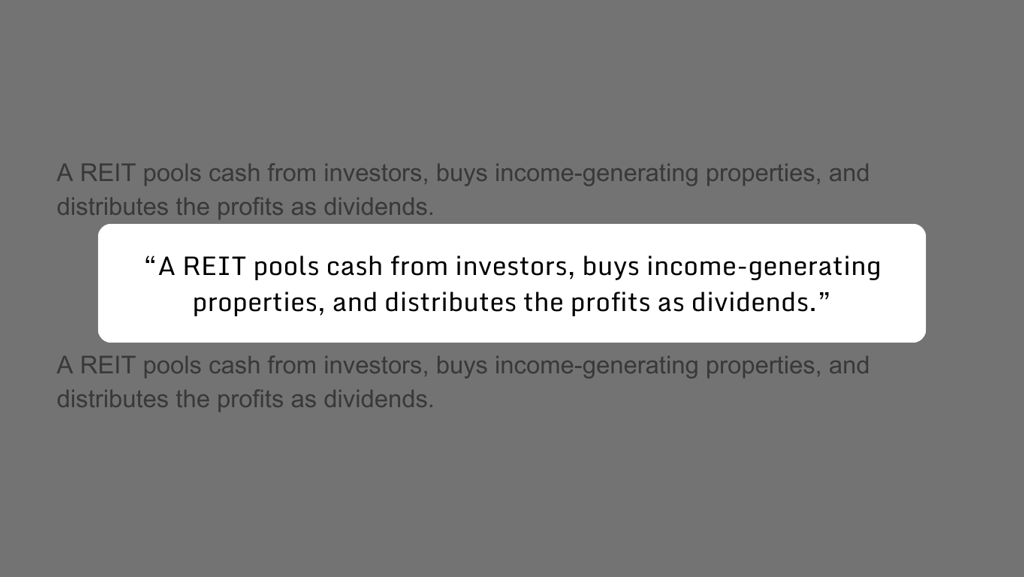
A REIT is a company that pools money from a lot of people (investors) to buy and own income-generating real estate or properties (e.g., malls, offices, hotels, warehouses) and pays the rental profits (dividends) to the investors.
A REIT is a simple way to invest in real estate without buying a house or land yourself. Think of it as investing in the company that invests in real estate.
So, a REIT lets you earn from property the same way you earn from shares.
Note: REITs can be publicly listed on the stock exchange or private. When it’s public, it’s liquid (easy to buy and sell). When it’s private, it’s illiquid (hard to buy and sell).
See: REITs to invest in.
How does a REIT work?
Here’s a simple explanation of how a REIT works:
A REIT gathers money (capital) from a large pool of investors. This capital is then used to buy properties that generate income. Then the REIT distributes the profits to investors as dividends.
In other words:
You buy units or shares of the REIT (just like buying stocks) and receive regular income when the REIT pays or distributes rental earnings or interest.
Example:
Instead of gathering N5 million with friends to buy a shop, you simply buy units in a REIT that already owns many shops.
This means you’ll spend far less money and still earn your share of the rent without the headaches of managing both the tenants and the properties.
REITs in Nigeria — the situation
You can see the situation of REITs in Nigeria in two ways.
On the upside
Nigeria’s REIT market is small but growing. Africa Horizons Report values it at about $600 million in 2024. This makes Nigeria a developing REIT market in Africa.
A few listed REITs (UPDC, SFS, UH) dominate the space. UPDC, for instance, reported an 88.5% occupancy rate and solid 2023 revenue.
Furthermore, the apex regulatory body for the Nigerian capital market, the Securities and Exchange Commission (SEC) of Nigeria, has clear REIT rules on ownership, valuation, and disclosure, which help to protect investors.
On the downside
The market still suffers from low liquidity. This prevents investors from entering and exiting it efficiently. And since there aren't many buyers or sellers, the trading environment is unsafe and often static.
On top of this, investors just don't have many choices. The investment options are limited, which makes it tough for them to spread their money around (portfolio diversification) and target a specific level of risk and return.
These main challenges deter local and foreign investors from jumping in and slow down the whole market's development.
However, REITs can still give you a strong head start if you’re completely new to real estate.
See: Are REITs a Good Investment in Nigeria?
Benefits of REITs for new investors
Without the headache of being a landlord, REITs give you the following benefits:
Access to property
Liquidity, and
Regular income.
1. Accessibility
With REITs, you don’t need millions to own a slice of residential or commercial real estate. All you have to do is buy units on the Nigerian Exchange (NGX), so your money goes into a pool that owns real properties.
This makes investing in real estate much more accessible to you than buying a whole building or plot.
Example:
Instead of raising N5 million with your friends or family to buy a shop, you can simply invest N200,000 in a REIT that owns many shops. That way, you get your share of rental profits without directly managing the property as a landlord.
So, REITs have a low money barrier to real estate.
2. Liquidity
One big challenge with traditional real estate is that it can be difficult to sell (illiquid).
However, with REITs, you can buy or sell units on the NGX, just like stocks. That means your investment is easier to convert to cash (liquid).
Example:
If you need money quickly, you can sell your REIT units instead of trying to find a buyer for a physical property.
3. Regular income
REITs typically collect rent from their properties and pay a big chunk of the profits (90-95%) to investors as dividends.
In 2024, Nigerian REITs pulled in about N2.26 billion in rent (Business Day). This shows there’s real cash flow from the sector.
Example:
You own REIT units in UPDC or SFS, and every quarter or half-year, you receive dividend payments. That is cash in your pocket without you having to collect rent or manage tenants.
So, REITs give you steady passive income or cash flow from rent.
See: How to make money on a REIT.
Subscribe to our newsletter
Get the latest updates and deals available only to subscribers.
REIT risks and what to watch out for
All types of REITs are great. But before investing in any of them, always watch out for the following risks:
Market risk
Occupancy risk
Interest rate risk
Management risk.
1. Market risk
Just like stocks, REIT prices can fluctuate, rising or falling. Economic slowdowns, high inflation, or low investment in the NGX can affect returns.
For instance, a 2025 report shows that despite its potential, the Nigerian REITs market still faces low liquidity and limited trading activity.
So, before investing, watch out for:
Trading volume and
Price stability.
2. Occupancy risk
This risk is when tenants don’t fully occupy the properties inside a REIT. With the vacant properties, rental income drops, and your dividends also drop.
For example, UPDC REIT reported an 88.5% occupancy rate in 2023. This means that 11.5% of the properties were vacant. This shows how vacancy directly affects how the investment performs.
So, before investing, compare the following:
Occupancy rates
Tenant quality, and
Property locations.
3. Interest rate risk
When interest rates rise in Nigeria, developers incur higher borrowing costs, which may slow down growth for some REITs.
Higher interest rates also push investors toward treasury bills and make REITs less appealing.
Before investing, pay attention to the Central Bank of Nigeria (CBN) interest rate announcements.
4. Management risk
A REIT is as solid as the team managing it. Poor management decisions, such as bad property acquisition or weak tenant screening, can negatively affect returns.
So, before investing, review the REIT manager’s:
Track record
Strategy, and
Financial reports.
See: How to invest in REITs for beginners.
Bottom line
A REIT is an easy, lower-cost way for Nigerians to earn from property without owning or managing buildings. It offers regular passive income, long-term capital appreciation, diversification, and liquidity (for listed funds). However, it comes with its own risks. Doing thorough research before investing will significantly reduce your risks.
Real estate investment trusts (REITs) FAQs
1. How many REITs are there in Nigeria?
There are currently three publicly listed REITs in Nigeria:
UPDC REIT
Skye Shelter Fund (SFS REIT), and
Union Homes (UH REIT).
The market is small but growing.
2. Why are REITs not popular with investors?
REITs aren’t very popular in Nigeria, mainly because many Nigerians don’t understand them, the market has only a few options, and trading volumes are low. This makes some investors prefer land, houses, or treasury bills.
Start building real wealth over time with Arkey Real Estate Limited.
Subscribe to our email list to get a template of a simple Co-Ownership MOU (Memorandum of Understanding).